Warm-up:
court sprints, vertical jumps
dynamic stretching
3x3 deadlift
KL: (135x5, 185x5, 225x3, 275x2 then 315/325/335 x3)
ED: (warm-up to 225 then 245/275/295 x3)
Cool-down:
butterfly kipping practice, KTE, towel pull-ups
A little heavy lifting before Coles shuts down for a week of maintenance - guess it's time to shift to bodyweight work and sprinting. Deads felt solid, switched to a mixed grip for the last set @335. Eric's form looked good given so much time away from the lift, a little shooting of the hips early but nothing major.
Helpful tutorial vid from Chris Spealer re: the butterfly kip:
Showing posts with label Technique. Show all posts
Showing posts with label Technique. Show all posts
Thursday, August 12, 2010

Friday, July 23, 2010
Technically snatch
Warm-up:
court jogs, vertical jumps
dynamic stretching
3x5 low-bar back squat (45x5, 95x5, 135x3, 185x2 then 215/225/235)
Oly technique work:
2x[5 snatch balance + 5 snatch] (45, 65)
1x[3 hang power clean + hang clean] (65)
3x15 bench press (45, 65, 95)
Ratcheting up the squat weights on a repressingly hot and humid night at Coles. Aimed for the slightest bounce - really, just a stretch - to avoid pausing at the bottom of the hole. Took a few reps to get the right velocity down and not lose tightness on the way. Tweaked my lower back on the first work set, but managed to finish all reps.
Shelved my plans for a metcon workout to do a little Oly technique work. Decided that I really have to work on my full squat snatches and cleans, which I tend to assiduously avoid for power reps. The snatch balance really helped to reinforce the position and motor programming for getting to the bottom with the weight overhead, the full snatches felt better than they ever have. Embarrassingly low weights but a good start.
Because I always have a hard time distinguishing the snatch balance, heaving snatch balance, and pressing snatch balance, here's a quick summary with vids from Catalyst Athletics (they also have a good discussion of snatch transfer skills/drills):
Snatch balance: Start with a barbell racked across the back of the shoulders as it would be for a back squat with hands in a Snatch grip. Start with your feet in the pulling position. Dip and drive at the knees to unload the bar momentarily, and transition the feet to the receiving position while driving yourself into the bottom of an overhead squat.
Heaving snatch balance: Start with a barbell racked across the back of the shoulders as it would be for a back squat with hands in a Snatch grip. Start with your feet in the catch or landing position. Dip as you would for a Jerk and drive yourself into the bottom of an Overhead Squat, catching with arms locked.
Pressing snatch balance: Start with a barbell racked across the back of the shoulders as it would be for a back squat with hands in a Snatch grip. Start with your feet in the catch or landing position. Press the barbell up as you drive yourself into the bottom of an Overhead Squat.
Friday, August 21, 2009
Warm-up:
good mornings
overhead squat
single-leg deadlift (40# DB)
clean + squat jerk (from blocks; 65,95,115,135,145)
back squat (high-bar, pause; 2x185,205,2x225)
5-5-4-4-5 bench press (140,155,155,150,145)
I didn't actually have blocks, but the pins in the squat rack are mid-thigh for me, so I just cleaned from there. Neat movement, really forces you to reverse directions very quickly.
Very cool video on bar paths:
Saturday, July 25, 2009
Warm-up:
overhead squat (to 3x135#)
foam rolling
2-2-2-1-1 hang power snatch (75,95,115,2x125)
10x1 snatch (3x135,2x140 [f1],145,2x150 [f1],2x155 [f1-2])
4x2 front squat (155,185,205,210)
Good workout. Darryl brought a stereo.
Some snatches compiled for a critique thread on the Crossfit forum:
Sage Burgener taking Syn (Crossfit Harlem) through some useful cues:
Thursday, July 9, 2009
Yoyo mojo
After almost zero deliberation, we have hit upon a new strategy to climb in the gym (see below). Nothing revolutionary, but Brian, Guillaume, and I commuted to TRC last night and decided to only yo-yo climb: any fall or hang on lead meant lowering to the ground, no hang-dogging or resting. With a three man rotation, we decided that next person ties in right away and that we would work a given climb until climbed through clean (or given up on).
With the zealotry of the newly converted, we worked a 9+, 10, 11, and 12. The 9+ (purple, Mad Russian column) was a tough choice for a warm-up, slightly overhanging but with pinches, odd holds, and big moves - took us each more than one try to nail it. The 10 (black) is a bit of an odd climb: easy 7/8ish climbing up to the arch roof, then a crux sequence involving a horizontal 180 degree turnaround and a single pad sidepull crossover to get out from under the roof. We worked this thing to death, but the seqeunce of the turnaround is tricky. Managed to pull the roof once but was too tired to clip. The 11 (purple) was good technical climbing, but G was the only one who made it past an awful lefthanded red crimp step up move, for which he was rewarded with a death-defying sidepull stretched out clip above. The 12 (red) was ridiculous balancey moves on tiny crimps; B wisely pulled a mat over, as we all managed to hit the deck from either the first or second bolt.
This strategy might be a keeper: we got a lot of climbing in, with no hanging or resting someone was pretty much always heading upward. There are a few advantages of this strategy that may prove beneficial:
- Volume - by repeating the easier lower moves, even on the harder climbs, you get more climbing in
- Repetition - seeing the same moves two or three times affords you the chance to be more efficient and immediately correct body position, sequence, etc.
- Quality - related to the volume of climbing, but in this case doing more moves when not pumped out means you can focus on quality, efficient moves rather than just hanging on for dear life; I often find my moves when hangdogging very bouldery, where I just try to reach the next clip
- Persistence - because giving up on a climb means lowering and waiting, rather than hanging and going again, I found myself really loathe to take on the rope
Thursday, June 11, 2009
Failures included
Bombs at 145# included for your viewing pleasure (bigger version here):
How early can you predict the failures?
Wednesday, February 25, 2009
A really great post on the active shoulder by Tracy Fober; here's a snippet, read the rest over at her blog. I've always wondered why people give the cue 'shoulder-into-ears' for movements like the overhead squat.
At a weightlifting meet, you'll hear coaches yell "push" or "reach" to their athletes. The athlete must aggressively resist the downward forces of gravity and barbell to successfully receive the bar and complete the lift. Many people confuse this aggressive "push" with a shrug of the upper trap. Yes, the upper traps are strong, but we do not want to elevate the shoulder girdle and decrease approximation of the scapula on the rib cage; nor do even want to think we can hold that weight up with upper body muscular strength. We receive the bar at arms length, lock the wrist and elbow in a fully extended position, and maximize contact of the scapula with the thorax via serious isometric contraction of scapular stabilizers. The human body supports the overhead load with the greatest area of bony stability possible, and transfers that force over the entire musculoskeletal system.
Sunday, January 18, 2009
Some technique work
Warm-up:
good mornings
overhead squat
back squat (to 1x(3+3)x185# high-bar + low-bar)
3x(2+2) high-bar + low-bar back squat (225#)
5x5 shoulder press (95,100,3x105 [f5 of last set])
deadlift (hook; to multiple singles at 315#) Video the other day revealed that my deadlift form is atrocious, so I spent a lot of time today trying to fix things. Focused on Rip's cues for setting up, particularly chest-up. Turns out that I can get to about 275# with good form. By 315#, however, I lose thoracic extension as the bar leaves the ground, which suggests I'm not doing a good job of taking the slack out of the system before lift-off. By the end I had a better feeling for locking down the upper back by squeezing the lats and triceps.
Some high-bar and low-bar squats at different loads to check form and depth. There's some pausing at the bottom cause these are warm-ups.
Thursday, January 15, 2009
That damned last rep!
Warm-up:
good mornings
overhead squat
6x5 overhead squat (95,105,115,125 [f5],135 [f5],135)
4x3 clean pull (135,3x155)
split jerk practice w/ bar
3x max pullups (15,12,8)
Gaaaah! Really pissed to have missed the last rep on two sets. The repetition is working though, feeling better in the bottom position, although as the video reveals, I'm still a bit wobbly.
The Crossfit mainsite WOD yesterday was 5x3 OHS, and as I browsed through some of the comments, I was surprised that lots of people mentioned shoulder inflexibility as a limiting factor. Really? Those people must have some frozen fucking shoulders. Watch the video below, can these people really not bring their shoulders to that position? Shoulder dislocates are often recommended to help achieve flexibility, but I always wonder, How does that help? Then I read something over at Rippetoe's forum that led me to believe that people complaining about shoulder flexibility are doing overhead squats with everything below the shoulders positioned like a low-bar back squat (example). Now that seems insanely painful; no wonder people have trouble with the OHS. I like Everett's response to the shoulder flexibility complaint; it's because your torso is fucking horizontal ... you’re putting too much of a demand on shoulder flexibility. If you are doing OHS as an assistance lift for the snatch, it makes sense to replicate that position you would achieve in that lift, which means doing the OHS with an upright torso (and well below parallel). If, on the other hand, you are doing OHS for hip drive, you should probably just do more low-bar back squats.
Watch me wobble and grunt!
Sunday, January 4, 2009
Sunday morning crew
Kicked off Sunday with a nice climbing session with Kenway and Jill at TRC. Got there just after 10AM and left around 2PM, so I won't be able to recall everything. Started off with a 9 and a 10-, both coming out from under the big arch on big juggy holds. Jill, who introduced Kenway to climbing all those years ago, got re-acquainted with the pump after a bit of a layoff from climbing. Confident after the nice warm-up, I went after the white 10 up front; I made it up smoothly and managed the last clip, but couldn't hold on to finish it off. Kenway took an exciting fall from the same hold, and we both took pretty big falls on a new 10 (yellow), me at the first roof (nearly left me forever childless) and him after pulling the second). Next I tried the pink 10b and made it to the last clip while Kenway went after the red 11 (seemed much harder than last time). Finished up working the bottom of a 10 with sketchy initial clips, which appropriately enough was titled 'Harder than you think'.
I figured out why the 10b is giving me so much trouble. It's quite reachy for me, and requires a lot of 'open' strength (imagine a negative face where you have three points on, but your legs are extended so you can't rotate into the next move, and the next piece as just at the extent of your reach). I'll try repping these moves in the bouldering cave next time. Malcolm Smith with some advice on climbing face-on and training 'open' strength:
Wednesday, December 31, 2008
More skill work (re-gripping the bar)
Warm-up:
front squat (to 2x2x185#)
2-position power snatch (to 75#)
front squat + split jerk (2x95,2x115,3x125)
Feeling really tired today. I'm getting sick and have no appetite. Decided to call the session while warming up with power snatches, but since I walked through the freezing cold to get to the gym, figured I'd do some light skill work. The front squat + split jerk complex comes from the video below (1:32), and I focused to re-gripping the bar coming out of the front squat (when you can pop the bar off your shoulders briefly). I can't do it nearly as nicely as Girard does (my elbows can't rotate down very much or I lose the bar forward), but I can at least get the bar off of my fingertips and onto my palm.
Christine Girard at the Calgary Training Camp:
Tuesday, December 30, 2008
Sneak in technique
Warm-up:
front squat (to 2x2x185#)
Burgener warm-up
snatch balance
muscle snatch (to heavy single; 95,100,105,110)
2-position power snatch (high-hang/hang; to 95#)
2-position snatch (high-hang/hang; to 95#)
Had about forty minutes to get in and out of the gym. Was going to try to stay on the PMenu cycle, but I didn't have enough time, so I just focused on technique based on some advice I got over at the PMenu forums.
Good reading: Pulling positions for the snatch by Mike Burgener
Sunday, December 28, 2008
More back squat comparisons
In a previous post, I had linked a great video comparing the low-bar and high-bar back squats. The video has been removed from YouTube, so I figured I would make my own since that post gets a fair number of hits. Cobbled together from a couple of warm-up squats at 225#.
Image below is from the bottom position, where it's a bit more obvious that in the high-bar squat the torso is more upright, the knees travel further forward bringing the hips closer to the ankles. Note that my stance is a couple of inches narrower for the high-bar squat, and I could probably stand to get my torso more upright and get a bit more depth by letting my knees drift forward more (click image for a better view, the white line indicates my knee position relative to my toes). I have to be really careful doing that since it's easy for my hips to tuck under when I sit on my ankles (not sure this is true for everyone). Another illustration from the Performance Menu:
 An Olympian's high-bar squat:
Thursday, December 25, 2008
PMenu WOD, Day 5, Week 1, Bulgarian 2
Warm-up:
back squat (high-bar; to 2x2x225#)
snatch pull + power snatch (to 100#; video of last couplet here)
Performance Menu WOD 111508
3x1x90% snatch (120#)
3x1x90% clean & jerk (160#)
2x2x90% back squat (high-bar, belt; 250)
Warmed up with a bunch of snatch pull + power snatch to try and keep my heels down a bit longer. Didn't seem to work, and the two pulls don't look the same. Will video more of these to make sure I'm not janking my mechanics with the pull.
Squat snatches felt good. I warmed up with singles to 115. Only managed to catch the first rep at 120 on video cause someone wanted to use the bench, but all three felt very similar. I can see a bit of a donkey-kick, but more worrisome is that fact that the barbell separates from my body fairly early (I think).
Cleans felt much better than jerks. I warmed up with singles to 155. Based on the set of videos, I focused on getting rid of that stupid double pump thing in setting up and shrugging hard at the top.
It's probably time to post to the PMenu forums to get some advice on improving things.
Tuesday, December 23, 2008
Virtual coaching (Clean & Jerk)
Yesterday was the first time I managed to get video of my clean & jerk. Despite having watched a fair number of lifting vids, I realized as I was reviewing my own that I wasn't very good at picking out the errors. What I needed was a set of videos with detailed critiques so that I could learn what to watch for. Such a resource exists for the low-bar back squat, but not the clean & jerk. So I headed over to the Crossfit and Catalyst Athletics forums looking specifically for posts with video and critique of the clean & jerk.
A number of posts are helping me analyze my own lifts, so I thought it might be useful to collect the gems for others. Note especially the comments by Greg Everett, Glenn Pendlay and Lincoln Brigham.
http://www.board.crossfit.com/showthread.php?t=31084
layback, coming forward, jumping backward
http://www.board.crossfit.com/showthread.php?t=26588 (corresponding video)
staying over bar, early scoop
http://www.board.crossfit.com/showthread.php?t=25184
starting position (dynamic), keeping bar close
http://www.board.crossfit.com/showthread.php?t=24075
submax loads
http://www.board.crossfit.com/showthread.php?t=24021
aggresiveness, keeping bar close, slow dip
http://www.board.crossfit.com/showthread.php?t=7160
thigh brush
http://www.board.crossfit.com/showthread.php?t=7176
critique of more experienced lifter
http://www.board.crossfit.com/showthread.php?t=7289
releasing hook grip
http://performancemenu.com/forum/showthread.php?t=3368
bar crashing, rack position, too forward
http://performancemenu.com/forum/showthread.php?t=3361
forward slide on jerk dip
http://performancemenu.com/forum/showthread.php?t=3260
leading with hips, shifting forward during 1st pull
http://performancemenu.com/forum/showthread.php?t=2744
leading with hips, getting elbows into clean rack position, clean vs. jerk rack, jerk foot timing, overhead position
The following article may also be useful:
Common Errors in the Clean and Jerk, by Mike Keelan
Sunday, December 21, 2008
How do you train contact strength?
There seems a lot of agreement among the best in the sport right now that this is an essential tool. They are using these consistently. Just bodyweight and ocassional weighted work too. Almost everyday...(?!) A ten minute workout is the minimum, the 'hardmen' are doing back to back sessions (20 minutes) to begin a day's climbing sometimes--and always as a final cap off. The far end of the scale may be Scotsman Dave MacLeod (who is at the pinnacle of professional hard trad & mixed climbing) who even uses the hang board to equivocate a day's climbing effort if the weather is too bad to get outside! My mind melts to even think of that...!
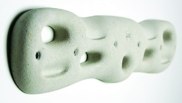 Read the rest here. Rob Shaul of Mountain Athlete has been posting interesting email exchanges on the workouts page of his site. Good reading.
Oh, and if you haven't been to Dave MacLeod's blog yet, go spend some time there as well. Lots of good info there, like How do I get better?! (in one email).
Saturday, December 13, 2008
Warm-up:
back squat (to 5x135)
5x5 back squat (2x155,185,205,225)
3x5 shoulder press (95,2x100)
4x8 seated calf raise (45,70,2x90)
rock rings (deadhangs)
Back felt fine during the squats, although my left lower back fatigued quickly. Keep them light and see how it goes. Messed around with trap-bar deadlifts, not sure if they are a useful movement.
Got a lot of crazy looks hanging the rock rings up. Just messed around with sets of deadhangs (5-10 seconds), starting with the jug and the top and moving down. All open hand, and boy it got my forearms pumped. Will do these on all non-climbing days (more training ideas here).
Monday, December 1, 2008
Specificity
From the animals over at Mountain Athlete
Guillaume, what is that move where he hooks his leg over his arm called again (in the 2nd video)?
Wednesday, November 26, 2008
Warm-up:
back squat (low-bar to 225#)
7x1 back squat (low-bar, belt; 245,260,2x270,275,280,285)
3-3-3-2-2-1-1 halting deadlift (belt; 295,2x315,335,355,375,395 [f])
2-5-5 halting deadlift (315,225,225)
1x20 curl-up
My belt arrived this week, so I decided to try some heavy singles to practice lifting with it. Belt felt great on the squats, definitely increases abdominal pressure. 285# was real slow though. Belt didn't feel so great on the halting deads; the top of the belt really dug into the bottom of my ribcage. It's gonna take a few sessions to break in the belt (incredibly stiff!) and figure out how tight and what position I need for each lift (some advice here, #6).
Thursday, October 9, 2008
I <4 deadlifts
There is no point in being alive if you cannot do the DeadLift.
-Jón Páll Sigmarsson
More sound advice from Rippetoe on how to avoid shitting yourself while deadlifting.
The videos below, besides demonstrating ridiculous strength, illustrate two different styles of conventional pulling. Koklyaev with a traditional straight-back, and Konstantinovs with a round-back (lumbar spine in extesion, thoracic spine allowed to round). I've seen some discussion of this technique, but I still fail to understand how at heavier weights this doesn't pose the same risk to your thoracic vertebrae as rounding your lower back does (obviously at lower weights for mere mortals). Anyone care to explain?
Koklyaev 3x370kg (816lb)
Konstantinovs 4x350kg (772lb)
Subscribe to:
Posts (Atom)


